

You eat salads. You drink green smoothies. You skip the fried food and count your sugar. And still, by evening, you feel heavy, bloated and foggy. You wake at three in the morning with your mind running in circles.
If that sounds familiar, Ayurveda has a surprising answer. The problem may not be what you are eating at all.
There is a story told about a young man who went to an old Ayurvedic physician feeling exactly like this. The physician looked at his coated tongue and did not ask what he ate. He asked when he ate, how fast he ate, and what he was thinking about while eating. Then he said one sentence that is worth remembering:
“The food is fine. It just isn’t being digested. And not only the food.”
You Are Not What You Eat. You Are What You Digest.
We have all heard “you are what you eat.” Ayurveda, India’s traditional science of health, gently corrects it: you are what you digest.
Two people can eat the same meal. One walks away light and energised; the other feels heavy and sleepy. The food was identical. The difference was what each body could do with it.
Ayurveda calls the force that does this work agni, the digestive fire. Agni takes whatever you eat and transforms it into you: your energy, your tissues, your clear thinking. The great physician Charaka called agni the root of life. When it burns well, you feel light, hungry at mealtimes, clear-headed and enthusiastic. When it struggles, you feel heavy, dull and stuck.
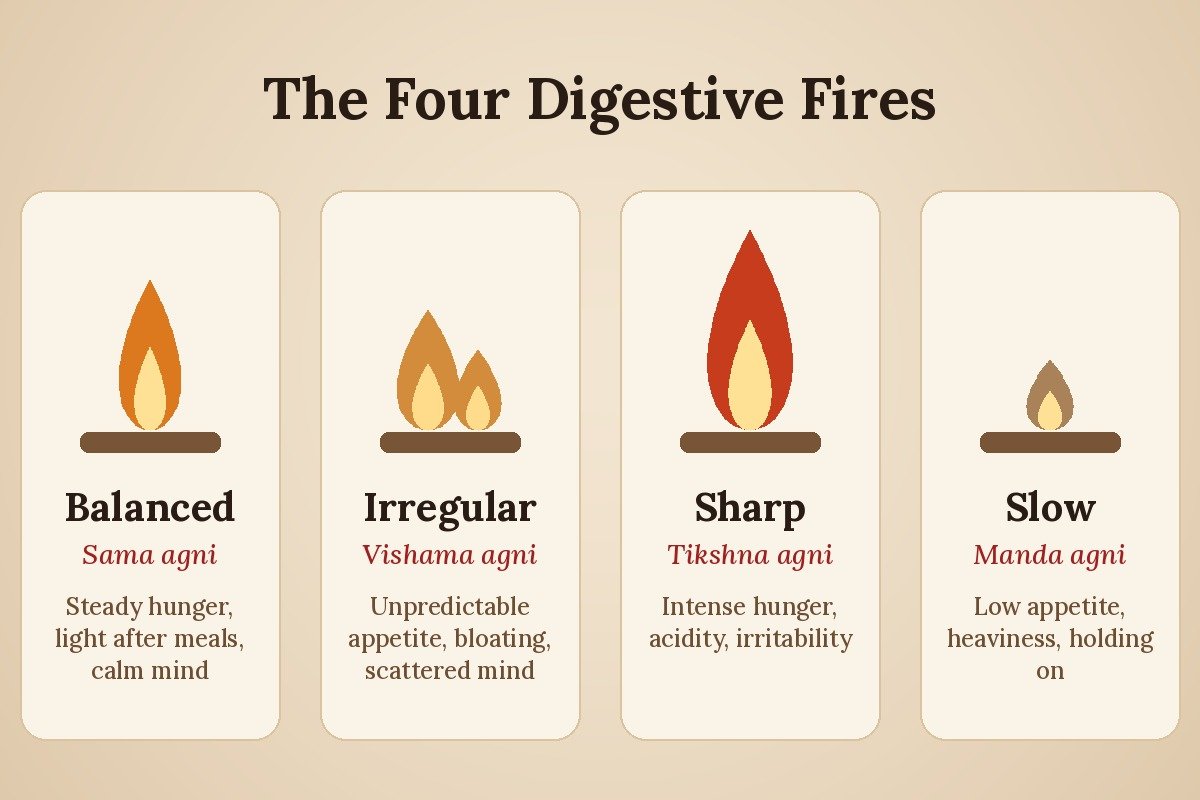
Ayurveda also describes four ways this fire can burn:
- Balanced (sama agni): steady appetite, comfortable digestion, steady energy.
- Irregular (vishama agni): hungry one day, bloated the next; often an anxious, scattered mind.
- Sharp (tikshna agni): intense hunger, irritability when meals are late, acidity, a short temper.
- Slow (manda agni): low appetite, heaviness after meals, a tendency to hold on to things.
Ama: The Sticky Leftovers
When agni cannot finish its work, food is left half-cooked. Ayurveda calls this residue ama, which literally means “unripe.” It is described as heavy, sticky and cold, and it clogs the body’s channels.
Common signs of ama in the body include:
- A thick coating on the tongue in the morning
- Heaviness and sluggishness, especially after meals
- Low appetite or a dull sense of taste
- Tiredness that sleep does not fix
- Irregular or sluggish elimination
Think of ama like a fridge full of small bowls of leftovers, each put away with “we’ll eat it tomorrow.” Tomorrow never comes, and the leftovers quietly go bad.
The Mind Has a Stomach Too
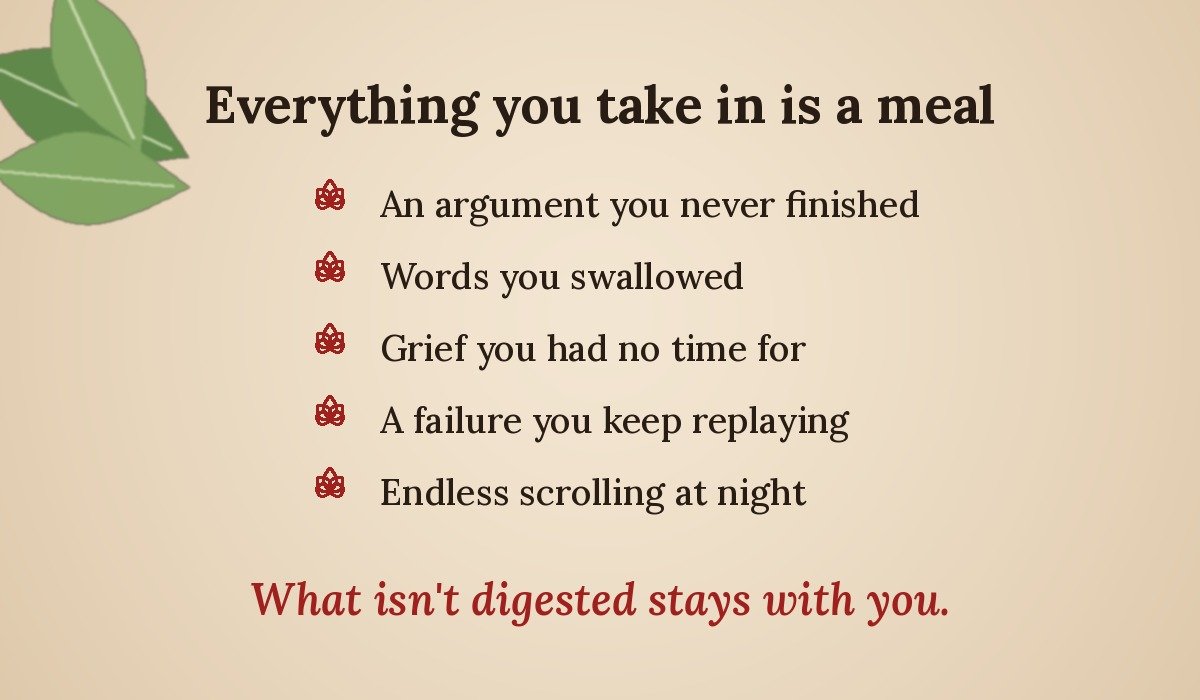
The Sanskrit word for food, ahara, means “that which is taken in.” The ancient teachers knew we take in far more than what passes through the mouth. Every conversation, image, worry and piece of news is a kind of meal, and each one has to be digested.
An argument you never finished is a meal. Words you swallowed are a meal. A loss you had no time to grieve, a failure you keep replaying, an hour of scrolling before bed: all meals. When the mind cannot digest them, they leave mental ama behind: the same thoughts looping, overreacting to small things, a foggy head, a heaviness you cannot explain.
Modern research points the same way. Stress shifts the body out of its “rest and digest” mode, and the gut and brain talk to each other constantly through the vagus nerve. The science is young, but the basic idea holds: your state of mind and your digestion are deeply connected, in both directions.
The Bhagavad Gita even describes the digestive fire as sacred, the divine dwelling within each body. Eating, in this view, is a small offering. That is worth remembering the next time you eat lunch in front of a screen.
Three Simple Practices to Start Today
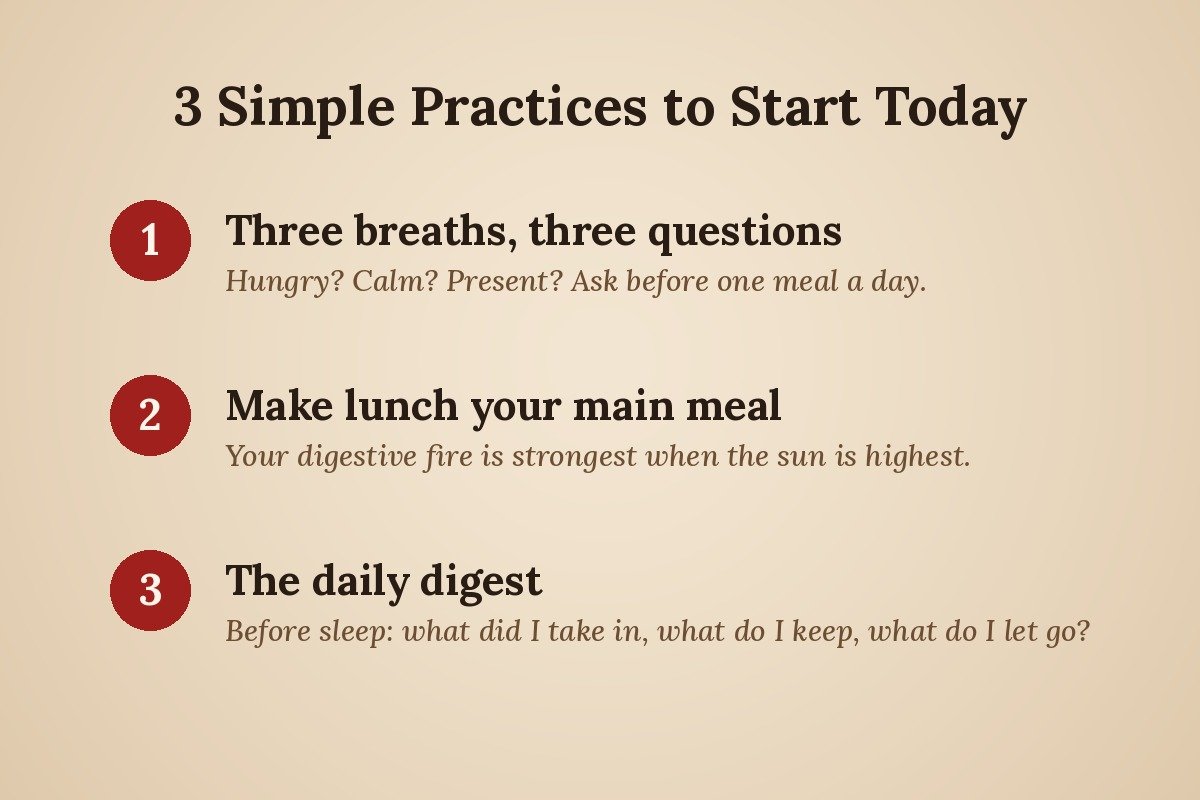
- Three breaths, three questions. Before one meal a day, put your phone away and take three slow breaths. Then ask: Am I actually hungry? Am I calm enough to eat? Am I here, with this meal?
- Make lunch your main meal. Ayurveda teaches that the digestive fire is strongest around midday, when the sun is highest. Eat your largest meal at lunch, and keep dinner light and early.
- The daily digest. Before sleep, spend five minutes asking: What did I take in today? What nourished me? What do I need to let go of? Keep the nourishment. Release the rest.
Start with just one. Try it for a week and notice what changes. Piling on every practice at once would be its own kind of overeating.
Go Deeper: What You Couldn’t Digest
This post only scratches the surface. My new book, What You Couldn’t Digest: An Ayurvedic Way to Heal the Food, Feelings and Years That Got Stuck in You, explores these ideas in depth, written like a long conversation with a friend.

Inside, you will discover:
- The four types of digestive fire, and which one is burning in you
- How to recognise ama in your body and in your mind
- Why anger, swallowed words, grief and old failures feel so heavy, and how to finally process them
- Why you overthink at 3 a.m., and how the Ayurvedic clock can help
- How to live in step with the day and the seasons
- What ojas is, and how to build the quiet radiance no supplement can buy
- Simple daily practices, a 21-day plan and an Agni Self-Check
No extreme diets. No miracle promises. Just ancient wisdom, honestly explained.
Frequently Asked Questions
What is agni in Ayurveda?
Agni is the digestive fire: the force that transforms food, and in a wider sense experiences, into nourishment. Ayurveda considers it the root of good health.
What is ama, and how do I know if I have it?
Ama is the undigested residue left when agni is weak. Common signs include a coated tongue, heaviness after meals, low appetite and persistent tiredness.
Can emotions really affect digestion?
Yes. Classical Ayurvedic texts say even wholesome food is poorly digested when eaten in anger, fear, worry or grief, and modern research shows stress changes how the gut works.
Is this book a diet plan?
No. It is a practical guide to digesting food, feelings and experiences better, with small daily practices rather than strict rules.
This article shares traditional wisdom for educational purposes and is not medical advice. Please see a qualified doctor for ongoing or severe symptoms.